Tactical Intelligence:
Why the Book of Acts is a Strategic Roadmap for 21st-Century Deployment
The modern church is suffering from a severe case of historical amnesia, treating the Book of Acts as if it were a dusty travel journal or a series of disconnected historical anecdotes. This perspective is a catastrophic failure of intelligence gathering.
By viewing the text as a passive diary, we effectively place the modern believer into "spectator mode," sidelined from the very movement they were called to lead. The reality is that the first-century church operated within complex Roman systems that were not merely indifferent, but actively hostile to the Gospel.
Today’s secular landscape is a "neo-pagan culture" that presents the exact same societal pressures, cultural barriers, and spiritual oppositions. To move from the pews to the frontline, we must stop looking at Acts as a record of the past and begin operationalizing it as a divine blueprint for the present. By shifting our perspective from ancient history to modern strategy, we recognize that because human nature and spiritual friction remain unchanged, the scriptural patterns established by the early church are tactical keys for our own theater of operation.
Avoiding the "Strategic Error" of History
The most common obstacle to church expansion is what the Acts 2020 Project defines as the "Strategic Error." This occurs when the text is relegated to the status of a private devotional or an ancient record, rather than a living mandate for deployment.
Relegating Acts to a dusty travel journal is a strategic error. It forces believers into 'spectator mode,' treating the Word of God as a disconnected history lesson. To correct this, we must adopt a "Campaign Approach." This involves a rigorous, 17-Part Curriculum designed to examine the text as a dynamic roadmap filled with repeatable principles.
When we shift from history to strategy, our interaction with the text changes fundamentally. We no longer engage in passive reading; we engage in intelligence gathering. We stop asking "What happened then?" and begin asking "How do we execute this mission today?" This transition turns a passive reader into a frontline strategist capable of navigating a modern campaign.
The Neo-Pagan Mirror
The environment of the first century provides a perfect mirror for our contemporary "neo-pagan culture." The Roman systems encountered by the apostles were characterized by deep-seated spiritual opposition and systemic resistance—the same challenges faced by modern disciples. Because human nature is a constant, the obstacles the early church overcame are the same ones we face today.
Recognizing this allows us to view the successes of the first century not as unique miracles to be admired, but as tactical keys to be applied. When we see our current cultural landscape through this mirror, we gain a strategic reality that informs our daily witness. We are not reinventing the wheel; we are following an established pattern of victory in a hostile environment.
The "Canonical Handshake" and the Vertical Link
Acts serves as the "canonical handshake" (Lens 6) of the New Testament, but its strategic depth goes further. It functions as the essential link that bridges the work of Christ in the Gospels with the practical, theological instructions found in the Epistles.
However, a strategist looks for continuity across the entire timeline. This handshake is reinforced by the "Vertical Link" of Prophecy Fulfillment (Lens 4). This link verifies the mission through ancient promises, proving that the church’s expansion was not a series of lucky breaks, but a pre-ordained campaign. This continuity is crucial for understanding the "divine blueprint." It shows that the instructions given to the early churches were forged in the heat of active mission and validated by eternal decree.
Turning Friction into Opportunity
In any strategic campaign, resistance is not an accident; it is an expectation. The early church utilized "Friction Analysis" (Lens 5) to navigate the "Acceptance & Opposition" inherent in the mission. Rather than seeing cultural barriers and societal pressure as obstacles to be avoided, they identified friction as a designed component of the church’s growth.Modern disciples can move from passive spectators to active witnesses by adopting this strategic mindset:
Friction is Design: Opposition is the very mechanism through which the Gospel is often propelled into new territories.
Intelligence Gathering: Discerning how cultural barriers are navigated allows us to turn societal resistance into an opportunity for expansion.
Operationalizing Opposition: Viewing friction through Lens 5 moves the church from a defensive, reactive posture to an offensive, unstoppable movement.
Discipleship is a Shared Duty, Not a Private Feeling
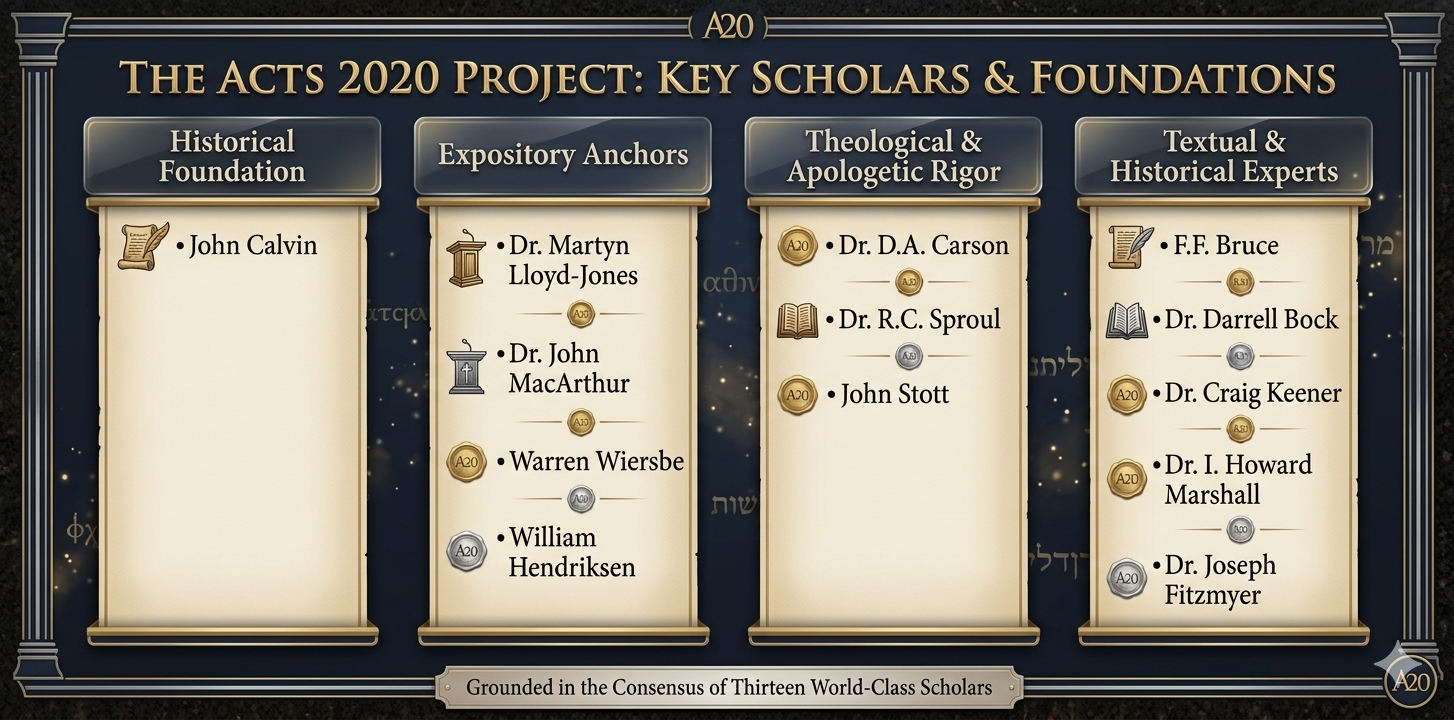
The "Final Verdict" (Lens 7) on the Book of Acts is the "Calculated Reality" of the church's designed growth. Discipleship is not a "private feeling" or a subjective experience to be nurtured in isolation; it is a shared, universally binding duty. The Great Commission is the fundamental pattern for every believer, moving the church toward "frontline engagement. This strategic shift is anchored in the verified exposition and consensus of thirteen world-class scholars.
Conclusion: A Provocative Call to Action
The scriptural blueprints for the 21st century have already been written. The Book of Acts provides the patterns, the power source, and the tactical keys necessary to engage a neo-pagan world. The time for passive discipleship has passed. The command of the Risen King requires active participation in an unstoppable global movement. The scriptural blueprint is in your hands. Will you continue to treat the Great Commission as a suggestion, or will you execute the campaign in your own zip code?
The frontline is waiting—it is time to move from spectator mode to frontline engagement.