
The Triumph of Christianity
“As for the triumph of Christianity, no student of civilization will ever underestimate its importance. Its victory over paganism was the purest ever won. For it was won by witnessing and enduring, by loving and suffering, by pouring out innocent blood. Conjecture loses itself in attempting to explain the 'why' and the 'how.' It was won by weak men and women, slaves often, and people of no social standing, but it was won against all the power and intellectual pride and prejudice of the civilized world.”
William Stearns Davis, Readings in Ancient History: Rome and the West
The Acts 2020 Project:
Welcome to the Frontline
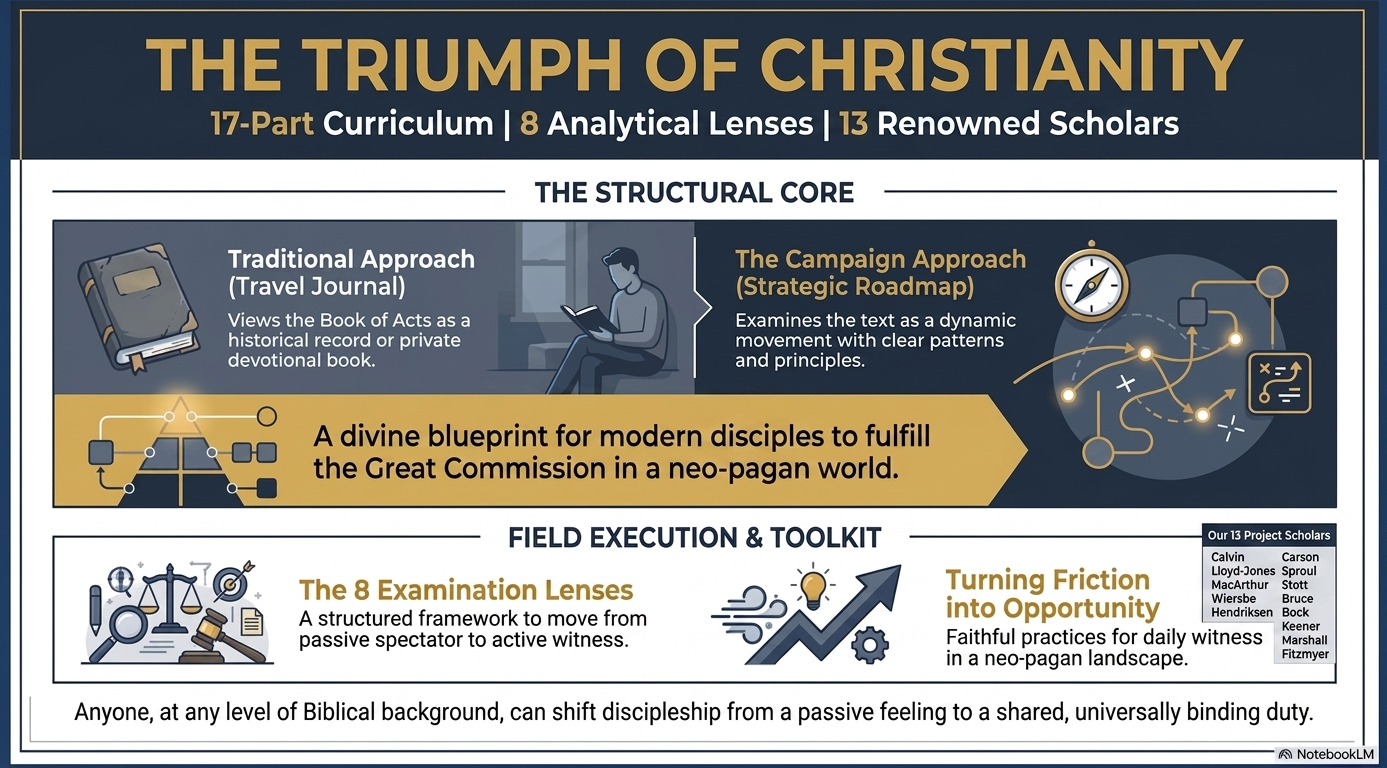
The Acts 2020 Project is an interactive 17-part discipleship curriculum designed to help you engage with and fulfill the authoritative instructions of our Risen King. Moving past the misconception that the Book of Acts is merely an ancient travel diary or a private devotional, this study treats it as an unchanging, divine blueprint for the church today.
Just as the first-century church successfully advanced the gospel through a hostile, pagan Roman Empire, modern believers are equipped to navigate our increasingly secular culture. By anchoring our study in the scriptural consensus of thirteen world-class scholars, we systematically examine the text through the 8 Lenses of Examination.
This rigorous framework shifts discipleship from a passive, private feeling into an active, shared duty across three areas of daily life: individual spiritual character, local church teamwork, and our daily witness.
The frontline is waiting. Examine the evidence and Go.
A Mission Guide for Modern Disciples
In the first century, the early church faced a culture dominated by pagan traditions, imperial infrastructure, and the hostile societal pressures of the Roman Empire. Today, we find ourselves in an increasingly secular, post-Christian landscape that feels eerily familiar. Because human nature and spiritual opposition have not fundamentally changed, the scriptural patterns we find in Luke’s Gospel and the Book of Acts are not historical trivia. They provide a direct, unchanging blueprint for how we live out the Great Commission today.
The Acts 2020 Project takes a completely different path to discipleship. Rather than focusing on the changing personalities of individual men, we anchor our attention entirely on the unchanging, divine blueprint issued by Christ. We view the first-century church for what it truly was: an unstoppable movement purposed by God to break through every human barrier. That frontline mission never stopped. As a follower of Jesus in the 21st century, this 17-part curriculum—spanning an introductory foundation and sixteen subsequent workbooks—is your practical guide.
From Spectator Mode to Frontline Engagement
The Great Commission is not an optional program reserved for specialized groups; it is the fundamental pattern for the existence of every church and every Christian in every age. Our curriculum helps you shift discipleship from a passive, private feeling into a shared, universally binding duty within your local church.
Early believers did not just survive; they advanced by thoughtfully understanding their environment, walking in the wisdom of the Spirit, and turning cultural friction into a platform to preach Christ. Today, we have a distinct advantage they did not have—instant, unhindered access to the completed Word of God interpreted by trusted shepherds and scholars.
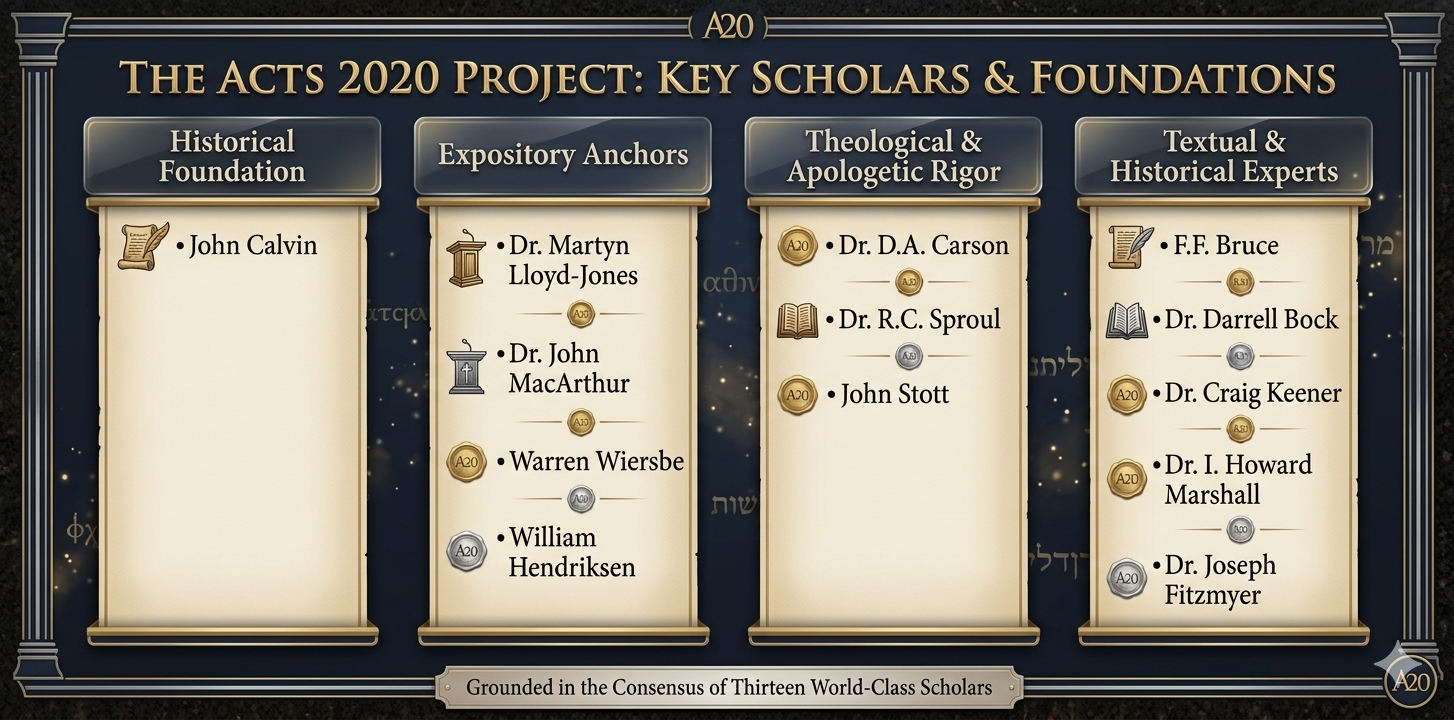
Our Interactive Research Hub enables you to engage directly with the insights of 13 specific scholars. This framework anchors your study in generations of faithful, verified exposition, entirely separate from modern speculation.
Go
The command of our Risen King is ringing out across our modern, neo-pagan culture, and the time for passive spectator discipleship is over. Step out of the pews, equip yourself with the unchanging scriptural blueprints of the first century, and engage your family, your local church team, and your neighborhood for the gospel. The frontline is waiting for you—examine the evidence, download the workbooks, and Go.