
Examination of the Passage
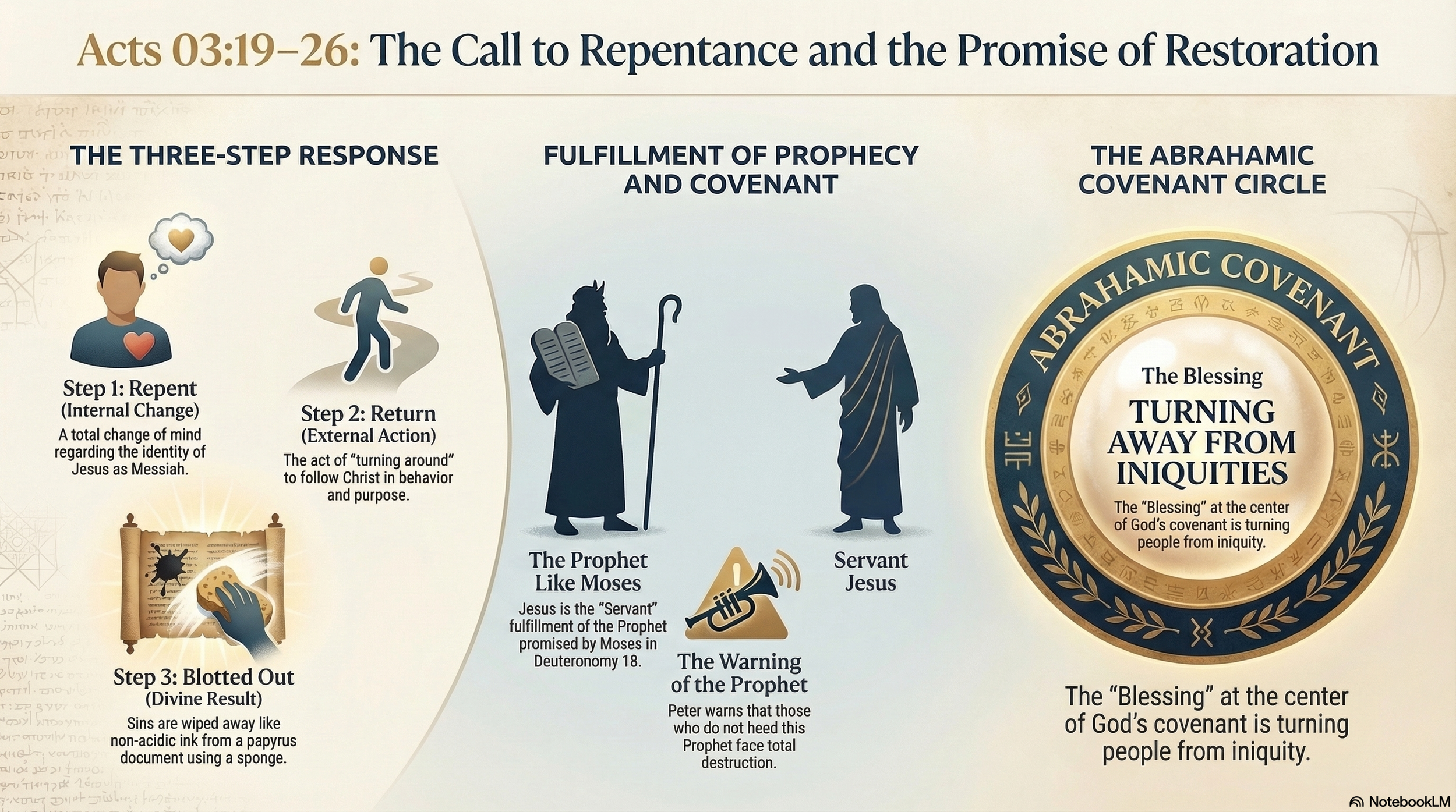
Acts 3:19-26 reveals that Peter extends a gracious call for Israel to repent and return to God after their rejection of the Messiah. This transition from indictment to hope emphasizes that if they change their mind regarding Jesus, the Christ appointed for you, their sins may be wiped away. Peter presents five primary motivations for this conversion: receiving forgiveness, the times of refreshing from the presence of the Lord, avoiding being utterly destroyed, and inheriting the promise that in your seed all the families of the earth shall be blessed. This appeal proves the period of restoration of all things about which the holy prophets spoke is tied to national repentance. Though they executed the Prince of Life, God graciously raised up His Servant to turn every one of you from your wicked ways.
To engage in a thorough Q&A with Dr. MacArthur's research, see “Ask John” section below.
Lens Presence
Lens 3: The Gospel (Telling the Story of Jesus) Peter centers the message on Jesus, the Christ appointed for you, explaining that true repentance is not merely an intellectual decision but a change of mind that issues in a change of behavior.
Lens 4: Prophecy Fulfillment (The Vertical Link) The investigation highlights the Vertical Alignment of this mission, as Peter quotes the promise of a prophet like me from your brothers from Moses and notes that all the prophets who have spoken, from Samuel and his successors onward, also announced these days.
Lens 6: The New Testament Bridge (The Canonical Handshake) This passage forms a Canonical Handshake with the epistles, specifically linking the blotting out of sins to the certificate of debt being nailed to the cross as explained in the book of Colossians.
Investigative Questions
"Ask John"
The primary discovery here is the conditional nature of the kingdom's arrival based on Israel's response to the Gospel message. Dr. MacArthur demonstrates that while the mission moves forward into the church age, the ultimate fulfillment of the times of refreshing awaits national repentance and the return of the King.
Lens 3: The Gospel (Telling the Story of Jesus)
How does the command to repent and return function as a required reversal of the crowd's previous verdict concerning Jesus?
What is the forensic significance of sins may be wiped away as if a damp sponge removed ink from papyrus?
Lens 4: Prophecy Fulfillment (The Vertical Link)
Why does Peter specifically identify Jesus as the prophet like me promised by Moses to establish the mission's legal standing?
How do the announcements of Samuel and his successors onward provide a formal paper trail for the current events in Jerusalem?
Lens 6: The New Testament Bridge (The Canonical Handshake)
How does the imagery of being wiped away connect to the doctrinal explanation of the certificate of debt found in later epistles?
What does the promise that all the families of the earth shall be blessed reveal about the transition of the mission to the Gentiles?