
Examination of the Passage
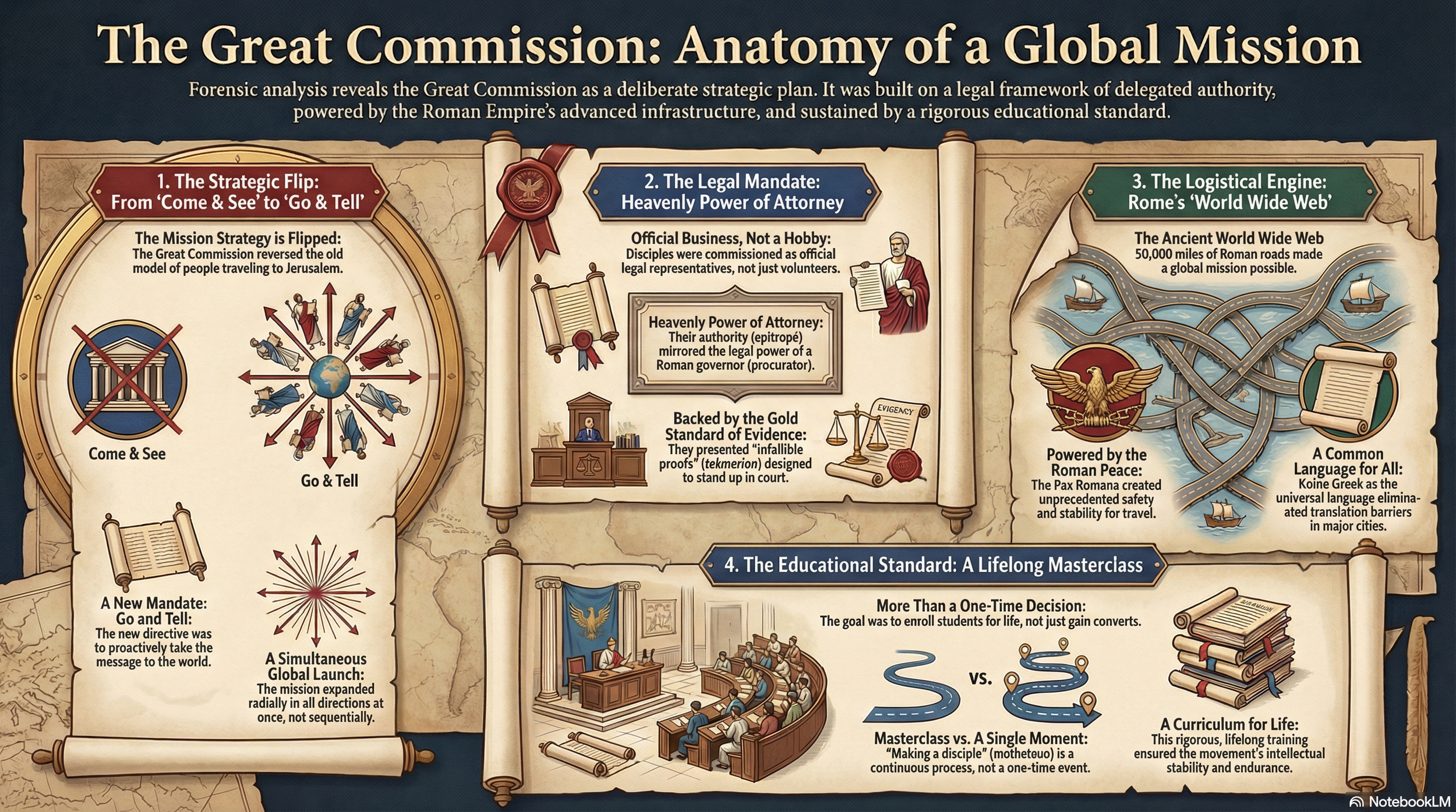
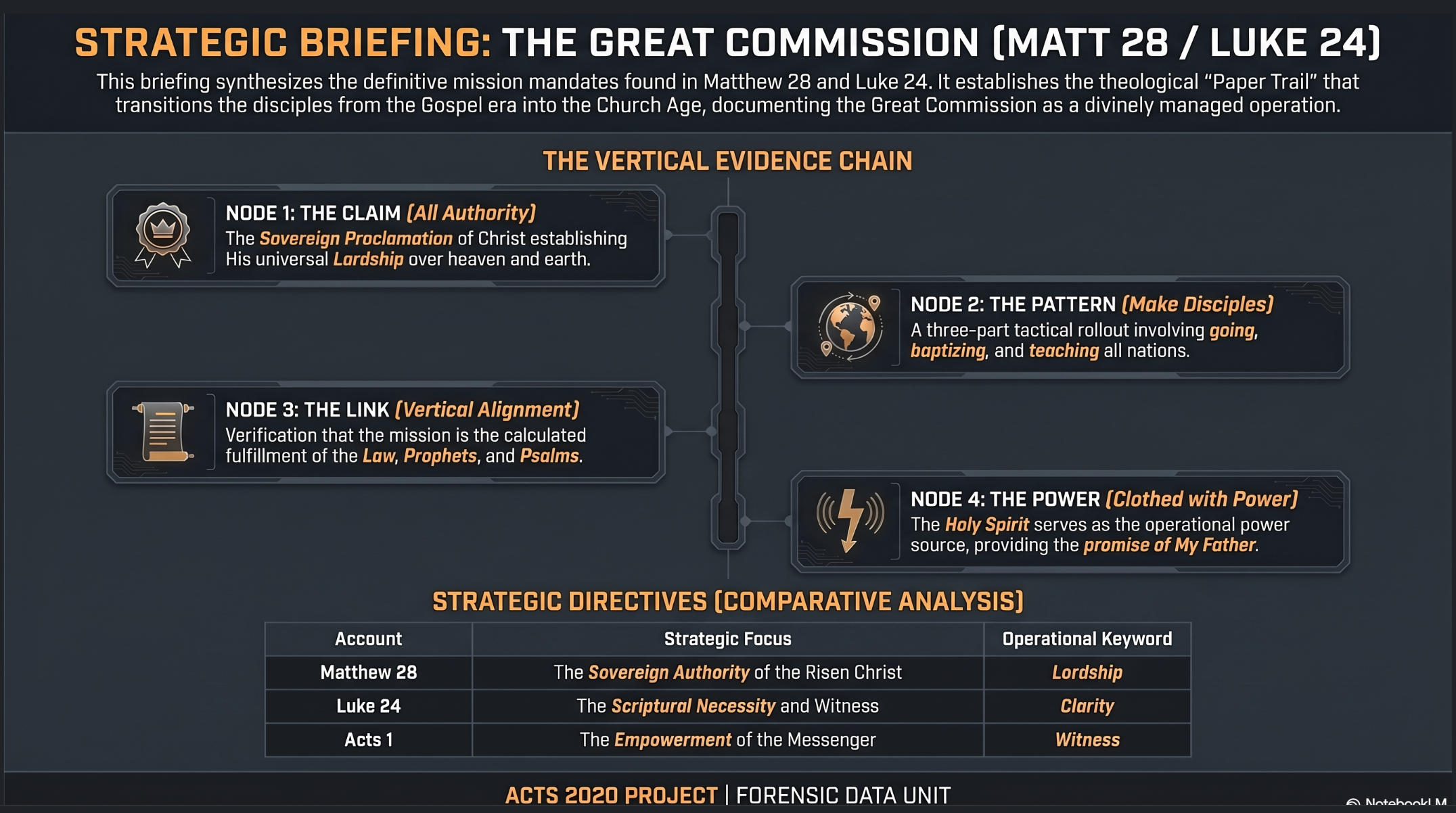
Matthew 28 and Luke 24 reveal that Jesus establishes the definitive mission for His followers. Standing on the mountain in Galilee, the Lord declares that all authority has been given to Me in heaven and on earth. This sovereign claim forms the bedrock for the command to make disciples of all the nations. Unlike a human inheritance, this is a divine legacy requiring a specific pattern of baptizing them and teaching them to observe all that I commanded you. In Luke’s account, Jesus provides scriptural clarity by opening their minds to understand the Scriptures, proving His suffering was a necessity. He promises that the followers will be clothed with power from on high. This marks the beginning of the proclamation of repentance for forgiveness of sins.
To engage in a thorough Q&A with Dr. MacArthur's research, see “Ask John” section below.
Lens Presence
Lens 1: God’s Plan (The Great Commission) MacArthur identifies the primary reason the church exists is to make disciples of all the nations. This mandate is a divine priority that supersedes all other church activities, establishing the global scope of the mission.
Lens 2: The Holy Spirit (The Power Source) The mission is impossible without the promise of My Father. MacArthur explains that believers receive the Spirit to provide the necessary strength for acting as witnesses of these things to the world.
Lens 3: The Gospel (Telling the Story of Jesus) The message centers on the physical reality of the Lord who would suffer and rise again from the dead the third day. Proclaiming the gospel means offering repentance for forgiveness of sins through His name.
Lens 4: Prophecy Fulfillment (The Vertical Link) Jesus proves the mission aligns with the Law of Moses and the Prophets and the Psalms. The gospel is not an intrusion but the continuity of the ancient plan found in the Scriptures.
Investigative Questions
"Ask John"
The Great Commission is the definitive bridge between the life of Jesus and the history of the early church. It reveals that the proclamation of the gospel is a divinely powered mandate rooted in ancient prophecy.
Lens 1: God’s Plan (The Great Commission)
How does the command to make disciples of all the nations shift the focus from a local witness to a global reach?
What does the claim that all authority has been given to Me mean for the right of followers to enter any region with the gospel?
Lens 2: The Holy Spirit (The Power Source)
Why is it impossible to fulfill this mandate without being clothed with power from on high?
In what way is the promise of My Father the essential resource for those acting as witnesses?
Lens 3: The Gospel (Telling the Story of Jesus)
How does the proclamation of repentance for forgiveness of sins serve as the transformational core of the message?
Why is the fact that the Christ would suffer and rise again from the dead the third day the non-negotiable anchor of the mission?
Lens 4: Prophecy Fulfillment (The Vertical Link)
Why was it necessary for Jesus to be opening their minds to understand the Scriptures to prove the mission's continuity?
How do the Law of Moses and the Prophets and the Psalms provide the historical standing for the followers' testimony?