
Examination of the Passage
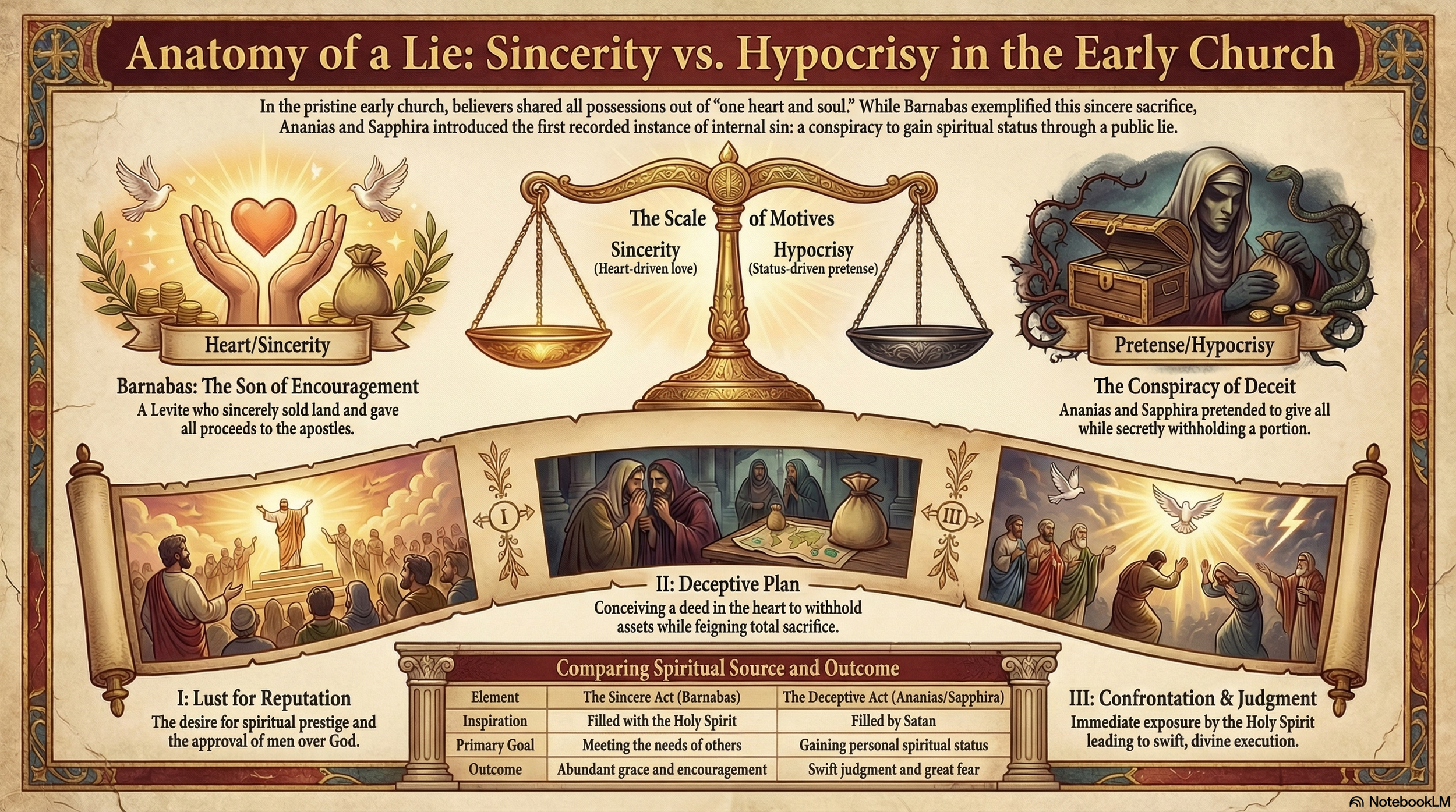
Acts 4:32-5:11 reveals that the early church operated with an unparalleled unity where believers were of one heart and soul. This spiritual harmony manifested in a voluntary sharing of resources, as owners of land or houses sold them and laid the proceeds at the apostles’ feet. However, this beauty was soon stained by the first recorded instance of internal sin. Ananias and his wife, Sapphira, attempted to gain spiritual prestige by pretending to donate the full amount of a property sale while they kept back some of the price. By doing so, they did not just lie to men but chose to lie to the Holy Spirit. This internal corruption was met with immediate divine judgment; both fell down and breathed their last. This swift punishment protected the purity of the body and ensured that great fear came over the whole church.
To engage in a thorough Q&A with Dr. MacArthur's research, see “Ask John” section below.
Lens Presence
Lens 2: The Holy Spirit (The Power Source) Ananias and Sapphira are rebuked for attempting to lie to the Holy Spirit. This passage confirms that the Spirit is a person and God, as Peter equates lying to Him with lying to God. Peter further charges them with having agreed together to put the Spirit of the Lord to the test.
Lens 3: The Gospel (Telling the Story of Jesus) Despite external threats, the apostles continued giving witness to the resurrection of the Lord Jesus with great power. This focus on the resurrected Christ fueled their unity and invited abundant grace upon the believers.
Lens 5: Acceptance and Opposition (Institutional & Geopolitical Friction) After failing to stop the mission through external persecution, Satan pivoted to internal corruption through sinful pretense. God used the execution of the hypocrites to maintain distinctiveness, ensuring that great fear acted as a strategic barrier to superficial association.
Lens 7: The Final Verdict (The Calculated Reality) Dr. MacArthur identifies this as a "sin unto death" for believers, illustrating that God’s standard for His church is absolute holiness. The passage documents the historical outworking of church discipline, establishing that the purity of the assembly is as vital as its expansion.
Investigative Questions
"Ask John"
The primary discovery in this passage is that the purity of the church is as vital as its expansion. God’s immediate judgment on Ananias and Sapphira illustrates that He will not tolerate a counterfeit spirituality that threatens the integrity of the whole church.
Lens 2: The Holy Spirit (The Power Source)
How does Peter’s confrontation of Ananias prove that the Holy Spirit is a person who can be lied to rather than an impersonal force?
What does it mean for a believer to put the Spirit of the Lord to the test regarding their private integrity and public testimony?
Lens 3: The Gospel (Telling the Story of Jesus)
Why was the practice of giving witness to the resurrection of the Lord Jesus considered so offensive to the authorities yet central to the church’s power?
How does the presence of abundant grace correlate with a congregation being of one heart and soul?
Lens 5: Acceptance and Opposition (Institutional & Geopolitical Friction)
Why is internal corruption, such as the desire for spiritual status, a more dangerous tactic than external physical persecution?
In what way does the result of great fear serve as a strategic barrier that prevents the rest from joining the church with superficial motives?
Lens 7: The Final Verdict (The Calculated Reality)
How does the account of Ananias falling down dead align with the warning in 1 Corinthians regarding those who eat the Lord's Supper in an unworthy manner?
Based on MacArthur's research, why was such a severe judgment necessary at the inception of the church to define the standard for all future generations?