
Examination of the Passage
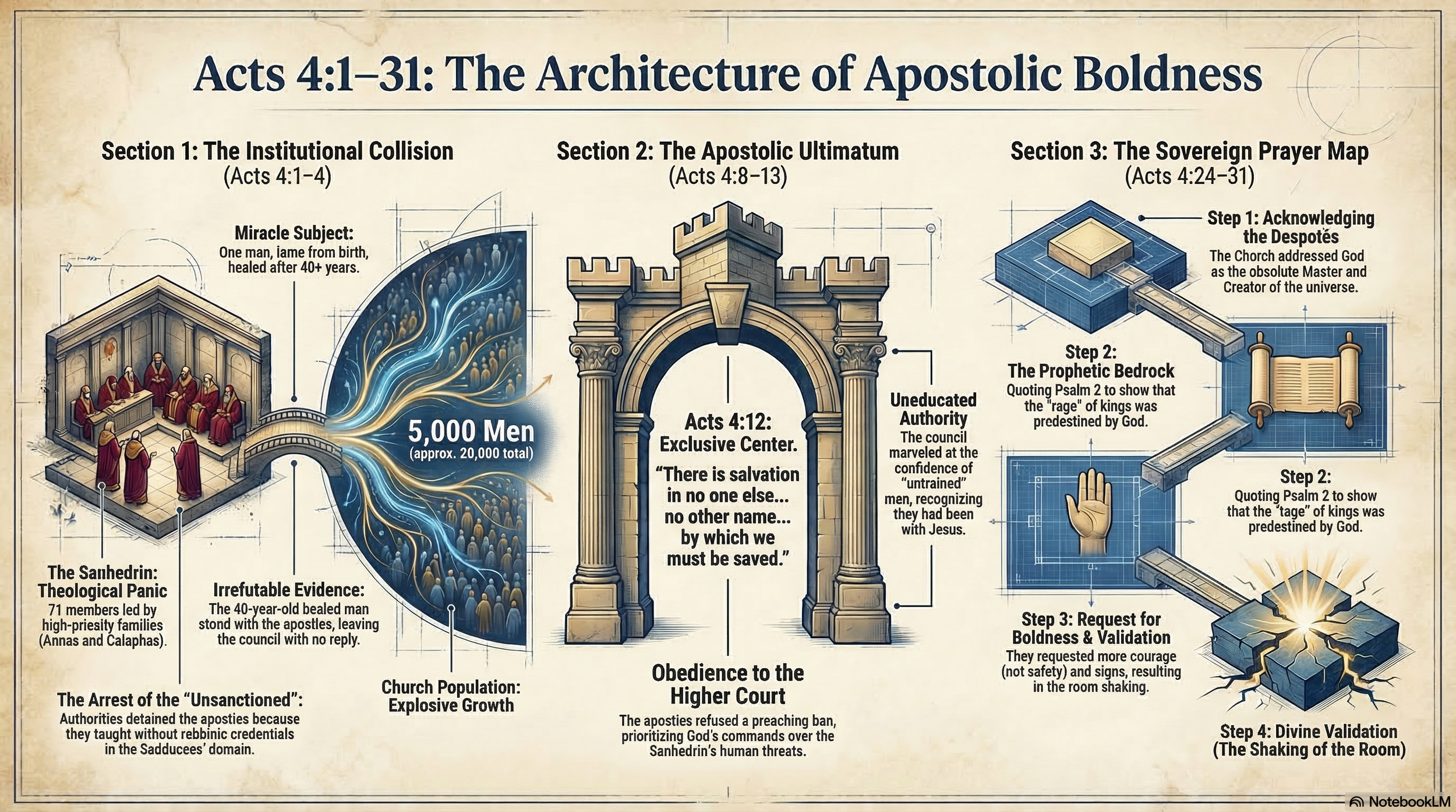
Acts 4:1-31 reveals that the mission expanded through severe opposition as the priests and Sadducees put them in jail for proclaiming in Jesus the resurrection from the dead. Despite this, the number of the men came to be about five thousand. Standing before the Council, Peter, filled with the Holy Spirit, identified Jesus as the stone which was rejected by you, the builders and declared salvation in no one else. Ordered not to speak or teach at all in the name of Jesus, the apostles prioritized obeying God rather than men. Upon release, the believers gathered to pray, citing the Messianic blueprint of the Psalms. They requested confidence to speak Your word. In response, the place where they had gathered together was shaken, and they were all filled with the Holy Spirit, continuing to speak the word of God with boldness.
To engage in a thorough Q&A with Dr. MacArthur's research, see “Ask John” section below.
Lens Presence
Lens 1: God’s Plan (The Great Commission) The expansion of the church to about five thousand men confirms that the mission is an unstoppable divine directive. The apostles' refusal to stop teaching demonstrates their commitment to the primary mandate over personal safety.
Lens 2: The Holy Spirit (The Power Source) The Spirit provides the necessary boldness for Peter to confront authorities. A second occurrence of being filled with the Holy Spirit results in the community continuing to speak the word of God with boldness.
Lens 3: The Gospel (Telling the Story of Jesus) The core message remains the resurrection from the dead and the exclusivity of the name of Jesus. Peter defines the Gospel as the only means of rescue, stating there is salvation in no one else.
Lens 4: Prophecy Fulfillment (The Vertical Link) The rejection of Jesus fulfills Psalm 118, identifying the Council’s opposition as part of the divine plan. The believers identify their current persecution as a fulfillment of Psalm 2 regarding how the Gentiles rage.
Lens 5: Acceptance and Opposition (Institutional & Geopolitical Friction) Institutional friction is evident as the Sadducees are greatly disturbed. The church responds to opposition not with political maneuvering but with corporate prayer and reliance on the sovereignty of God.
Lens 6: The New Testament Bridge (The Canonical Handshake) The principle of obeying God rather than men provides the doctrinal foundation for civil disobedience. The community’s shared life and prayer reflect the operational standards for the church later detailed in the Epistles.
Investigative Questions
"Ask John"
The primary discovery in this passage is that corporate prayer and Spirit-empowerment are the Church’s divinely appointed responses to institutional threats. When the mission is challenged by earthly authorities, God validates the apostles' commitment through a physical manifestation of His presence.
Lens 1: God’s Plan (The Great Commission)
How does the growth of the number of the men to about five thousand prove that persecution can accelerate the mission?
Why is the apostles' decision to obey God rather than men essential for the long-term success of the Great Commission?
Lens 2: The Holy Spirit (The Power Source)
What is the significance of the place where they had gathered together being shaken after their prayer?
How does being filled with the Holy Spirit in verse 31 provide the specific power needed for bold proclamation?
Lens 3: The Gospel (Telling the Story of Jesus)
Why is the name of Jesus the specific target of the Council’s attempts to silence the apostles?
In what way does the declaration that there is salvation in no one else eliminate all other religious options?
Lens 4: Prophecy Fulfillment (The Vertical Link)
How does the application of Psalm 2 regarding how the Gentiles rage and the peoples plot provide comfort to the early church?
Why does Peter use the analogy of the stone which was rejected to indict the religious leaders?
Lens 5: Acceptance and Opposition (Institutional & Geopolitical Friction)
Why were the religious leaders greatly disturbed specifically by the doctrine of the resurrection from the dead?
How does the Council’s inability to deny the noteworthy miracle expose the weakness of their opposition?
Lens 6: The New Testament Bridge (The Canonical Handshake)
How does the believers’ prayer in Acts 4 provide the historical context for the instructions on prayer found in later epistles?
What doctrinal precedent is set when the apostles decide they cannot stop speaking about what they have seen and heard?