
Examination of the Passage
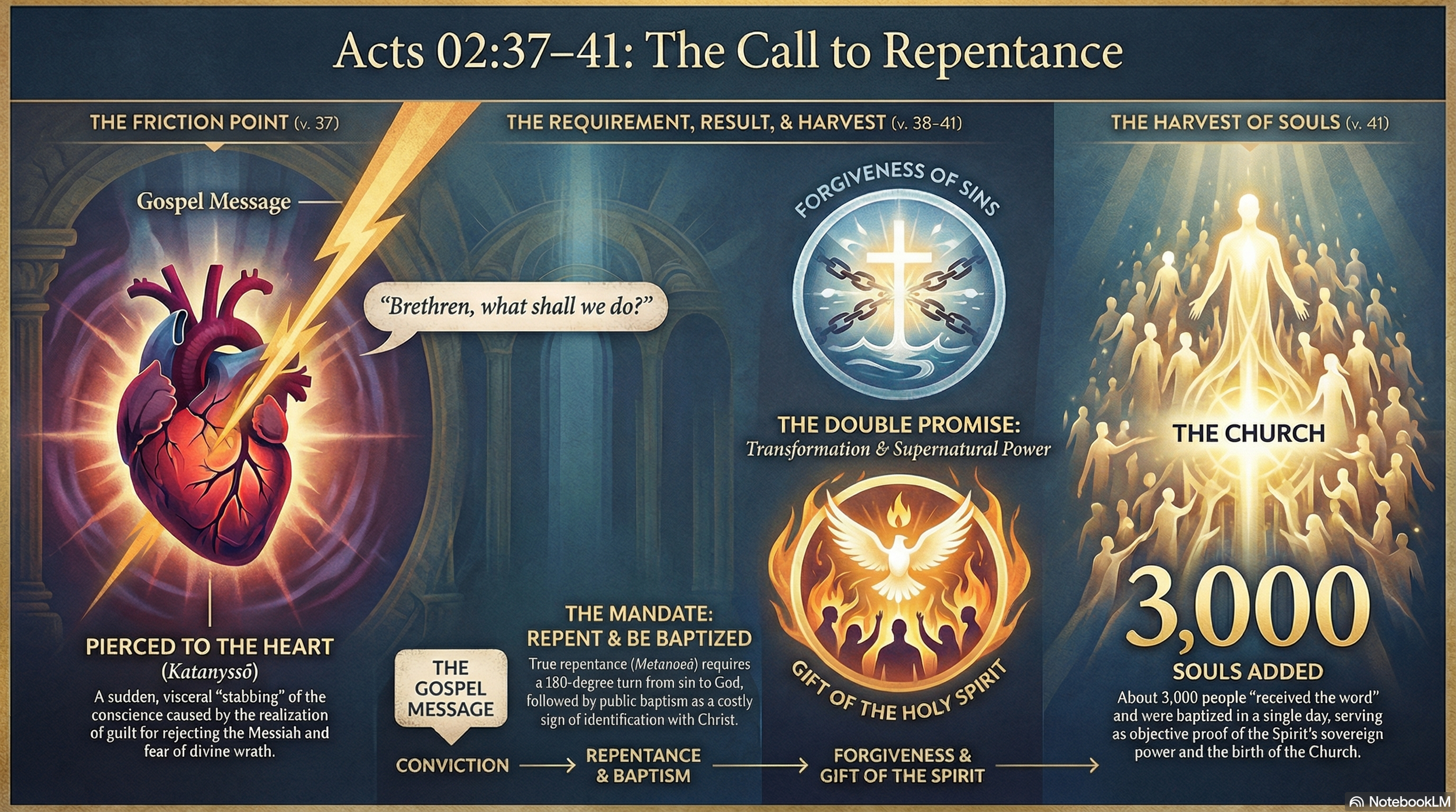
Acts 2:37-41 reveals that the first Christian sermon results in a mass turning to God as the listeners were pierced to the heart by the conviction of the Holy Spirit. Confronted with their guilt in the crucifixion of the Messiah, the crowd asks, what shall we do? Peter provides the definitive answer: Repent and be baptized for the forgiveness of your sins. This public identification with Jesus ensures they will receive the gift of the Holy Spirit, a promise extending even to those far off. Despite the high cost of breaking from their culture, about three thousand souls were added that day after Peter solemnly testified and kept on exhorting them to be saved from this perverse generation. This marks the successful establishment of the early church through genuine conversion.
To engage in a thorough Q&A with Dr. MacArthur's research, see “Ask John” section below.
Lens Presence
Lens 2: The Holy Spirit (The Power Source) The Holy Spirit initiates the internal transformation, using the Word to ensure the listeners are pierced to the heart. He is the ultimate gift granted to those whom the Lord our God shall call to Himself, marking the arrival of Messianic times.
Lens 3: The Gospel (Telling the Story of Jesus) The message demands that individuals Repent and publicly identify with Jesus by being baptized. This identification with the crucified and resurrected Lord results in the full forgiveness of your sins.
Lens 5: Acceptance and Opposition (Institutional & Geopolitical Friction) Acceptance of the Gospel required a radical break from a perverse generation. By choosing to be baptized, new believers risked total social exile from Judaism to identify with the Messiah their leaders had executed.
Investigative Questions
"Ask John"
The primary discovery in this passage is the blueprint for genuine conversion, which begins with deep conviction and concludes with a public, life-altering commitment. Dr. MacArthur emphasizes that salvation is not a mere ritual but a transformation that demands a total break from a rebellious culture.
Lens 2: The Holy Spirit (The Power Source)
How does the Holy Spirit use the Word of God as a sword to ensure listeners are pierced to the heart during a gospel presentation?
Does the gift of the Holy Spirit depend on any supernatural phenomena, or is it the unmerited result of true repentance?
Lens 3: The Gospel (Telling the Story of Jesus)
Why does Dr. MacArthur define the command to Repent as a total turn from sin rather than a mere fear of consequences?
In what way does the phrase forgiveness of your sins provide the legal and spiritual basis for the believer’s new life in Christ?
Lens 5: Acceptance and Opposition (Institutional & Geopolitical Friction)
How did the requirement to be baptized serve to weed out those who were not genuine in their commitment to Jesus?
Why was it critical for the new believers to be saved from the specific perverse generation that had rejected their Messiah?