
Examination of the Passage
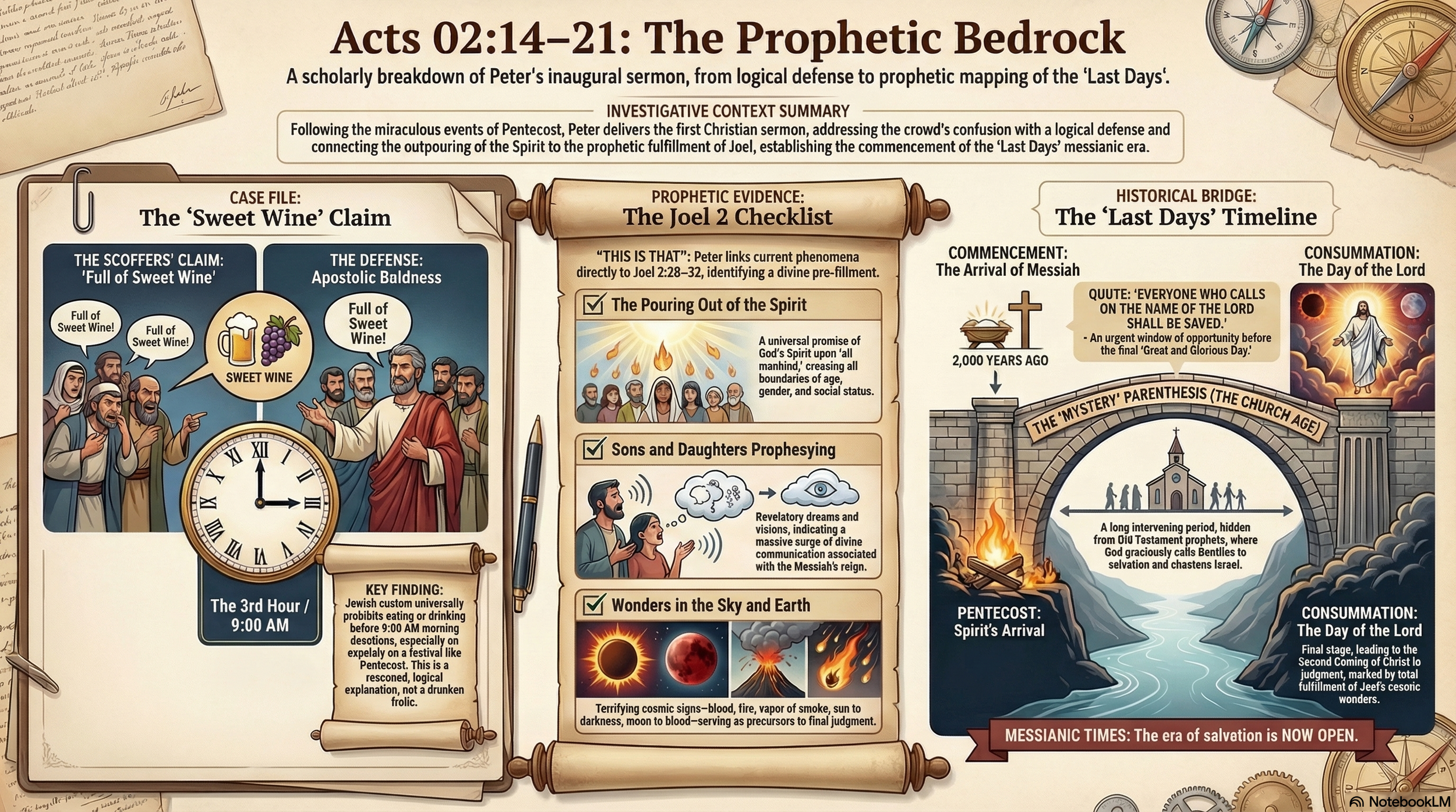
Acts 2:14-21 reveals that Peter, taking his stand with the eleven, prioritizes preaching as the primary method for the Spirit’s work. He refutes the charge of being drunk by noting it is only the third hour of the day. Instead, he identifies the phenomena as what was spoken of through the prophet Joel. This moment marks the arrival of the last days, which are the Messianic times beginning with the first coming of Jesus. Peter explains that God will pour forth of My Spirit upon all mankind, resulting in young men who see visions and old men who dream dreams. While full fulfillment awaits the millennial kingdom, Pentecost serves as a preliminary sample of kingdom power. The introduction concludes with the urgent promise that everyone who calls on the name of the Lord shall be saved. This proclamation establishes the doctrinal foundation for the church, ensuring the mission aligns with the divine blueprint.
To engage in a thorough Q&A with Dr. MacArthur's research, see “Ask John” section below.
Lens Presence
Lens 2: The Holy Spirit (The Power Source) MacArthur emphasizes that the Spirit-inspired utterance began at Pentecost as God began to pour forth of My Spirit upon all mankind. This power provides a foretaste of the future kingdom where even bondslaves, both men and women, will prophesy.
Lens 3: The Gospel (Telling the Story of Jesus) The sermon contains the essential message of salvation through the one whom people must reach by choosing to call on the name of the Lord. This proclamation is undergirded by doctrinal teaching, ensuring the message is not merely emotional but based on the mighty deeds of God.
Lens 4: Prophecy Fulfillment (The Vertical Link) Peter proves the mission is not a drunken aberration but what was spoken of through the prophet Joel. By citing the Old Testament, Peter establishes that the last days have arrived, aligning the current events with the ancient divine blueprint.
Lens 6: The New Testament Bridge (The Canonical Handshake) This passage provides the historical foundation for the doctrinal instruction found in the Epistles, such as when Peter later writes that Christ has appeared in these last times. It bridges the gap between the suffering servant of the Old Testament and the reigning King of the New.
Investigative Questions
"Ask John"
The primary discovery in this passage is the absolute priority of preaching as the divinely ordained method for explaining supernatural events and calling for a response. Peter demonstrates that the church’s witness must be rooted in an authoritative explanation of Scripture and the current work of the Spirit.
Lens 2: The Holy Spirit (The Power Source)
How does the Spirit’s decision to pour forth of My Spirit at Pentecost serve as a preliminary sample of the power promised for the future millennial kingdom?
In what way does the Spirit enable the apostles to be taking his stand with boldness compared to their previous fear and hesitation?
Lens 3: The Gospel (Telling the Story of Jesus)
Why is it necessary for Peter to include doctrinal content when he declares that everyone who calls on the name of the Lord shall be saved?
How does the mention of the great and glorious day of the Lord create a necessary urgency for the hearers to accept the message of salvation?
Lens 4: Prophecy Fulfillment (The Vertical Link)
How does the quotation of what was spoken of through the prophet Joel provide the legal and historical standing required to validate the mission?
Why is the arrival of the last days a critical identification for Peter to make when addressing a Jewish audience familiar with the Messianic promises?
Lens 6: The New Testament Bridge (The Canonical Handshake)
How does Peter’s explanation of the Spirit’s work here align with later instruction that believers are the temple of the Holy Spirit?
In what way does the transition from the Old Testament suffering servant to the New Testament reigning King bridge the historical events of the cross with the future signs on the earth beneath?