
Examination of the Passage
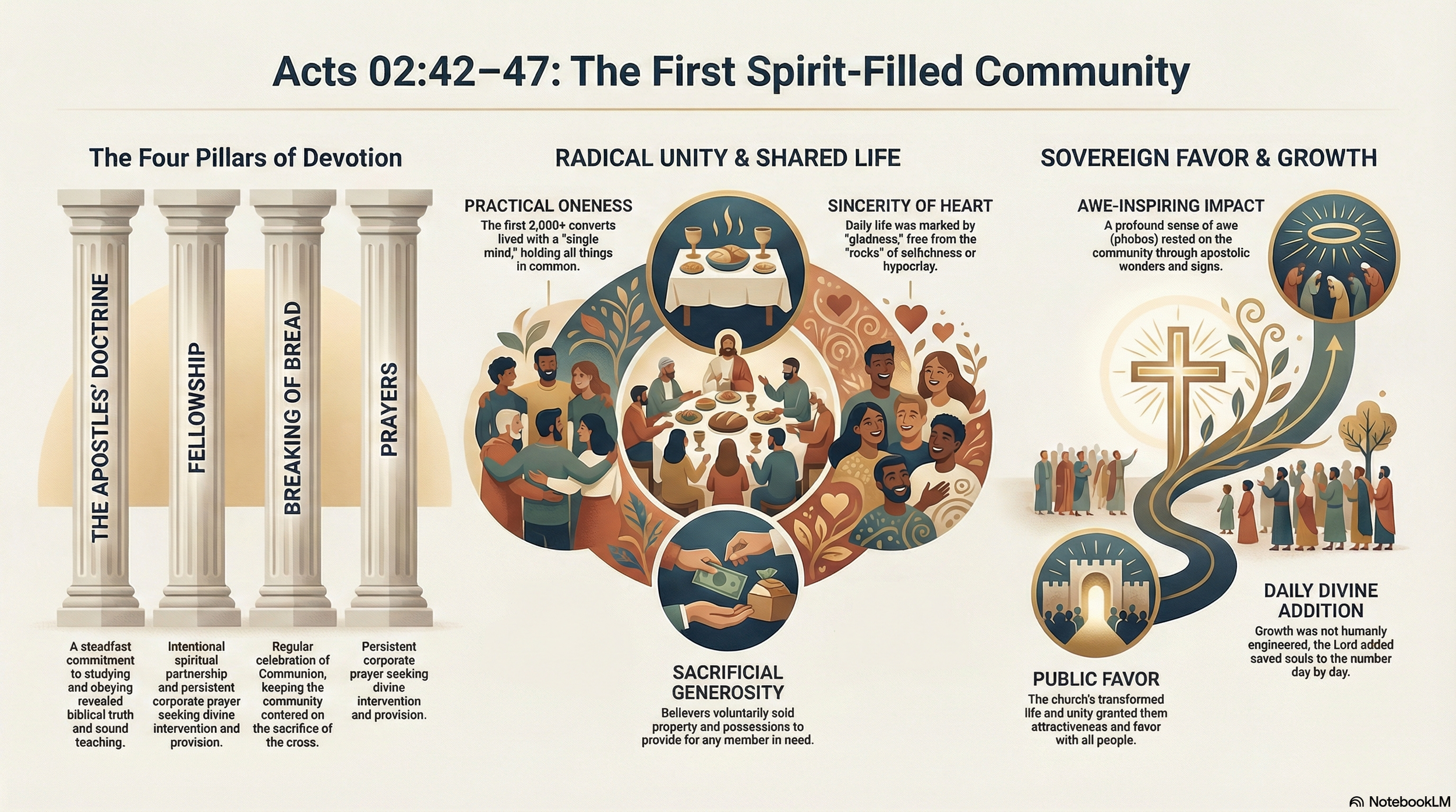
Acts 2:42-47 reveals that the newborn church functioned as a unified body, continually devoting themselves to the apostles’ teaching and to fellowship. This early assembly was a saved community where all those who had believed were together. They lived with a profound sense of awe, witnessing many wonders and signs performed through the apostles. Their shared life involved breaking bread from house to house and taking their meals together with gladness and sincerity of heart. This was a spiritual household where they had all things in common, even selling their property and possessions to ensure they were sharing them with all, as anyone might have need. As they were praising God and having favor with all the people, the movement grew because the Lord was adding to their number day by day those who were being saved.
To engage in a thorough Q&A with Dr. MacArthur's research, see “Ask John” section below.
Lens Presence
Lens 2: The Holy Spirit (The Power Source) Dr. MacArthur notes that the awe felt by everyone was a response to the divine presence and power of the Holy Spirit moving through the apostles. The expansion of the church was not humanly managed; rather, the Lord was adding to their number as a direct result of His sovereign power.
Lens 3: The Gospel (Telling the Story of Jesus) The identity of this assembly was strictly defined by salvation; MacArthur asserts that in this first fellowship, all the professors were possessors. They were continually devoting themselves to the apostles’ teaching, which consists of the revealed truth regarding the life and work of Jesus.
Lens 6: The New Testament Bridge (The Canonical Handshake) Acts 2 serves as the historical application of doctrine that is later defined in the Epistles. MacArthur bridges this communal life to the body metaphor in 1 Corinthians 12 and the command for fellowship and sharing found in the writings of John and Peter.
Lens 7: The Final Verdict (The Calculated Reality) This passage documents the historical outworking of God's ideal in the first local church. It provides the permanent identification tags for what a church must be to remain effective in its mission throughout history.
Investigative Questions
"Ask John"
The primary discovery in this passage is that the first church was a spiritual household where transformed lives, not worldly methods, drove the growth of the movement. Dr. MacArthur demonstrates that a healthy assembly is marked by its devotion to divine truth and sacrificial love for the household of faith.
Lens 2: The Holy Spirit (The Power Source)
How does the presence of many wonders and signs confirm the Holy Spirit was supervising the mission of the apostles?
Why is the fact that the Lord was adding to their number proof that the Holy Spirit is the ultimate source of church growth?
Lens 3: The Gospel (Telling the Story of Jesus)
Why does Dr. MacArthur emphasize that being a saved church, where people are continually devoting themselves to truth, is the first duty of a fellowship?
In what way does the apostles’ teaching serve as the necessary content for a believer to grow in the knowledge of Jesus?
Lens 6: The New Testament Bridge (The Canonical Handshake)
How does the fellowship described here align with the instructions in 1 John regarding believers walking in the light?
How does the practice of breaking bread from house to house illustrate the body of Christ principles found in 1 Corinthians 12?
Lens 7: The Final Verdict (The Calculated Reality)
Does the fact that they had all things in common establish a permanent requirement for communal living, or was it a unique historical response to the mission's beginning?
Based on the evidence of design in this passage, why is this specific model of the church still authoritative for the modern believer?