
Examination of the Passage
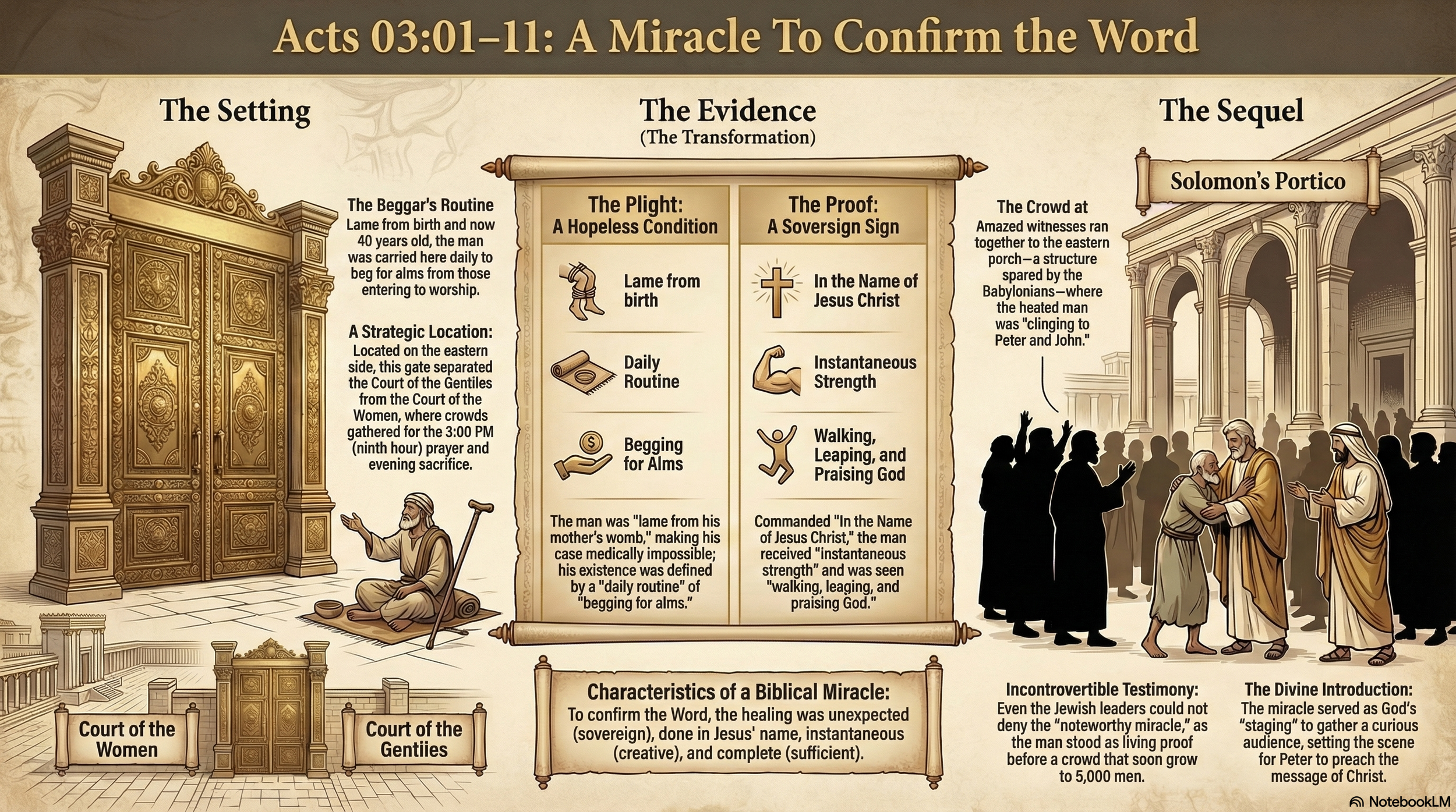
Acts 3:1-11 reveals that Peter and John encountered a man lame from his mother's womb at the gate of the temple which is called Beautiful. While the man was expecting to receive something in the form of money, the apostles provided a far greater gift. Declaring they do not possess silver and gold, they commanded him to walk In the name of Jesus Christ the Nazarene. This event was not a random act of charity but a divine accreditation of the apostles as messengers of God. By seizing him by the right hand, the man’s feet and his ankles were strengthened immediately. His public display of walking and leaping and praising God at the portico which is called Solomon’s served as an undeniable sign to the crowd. This supernatural event confirmed the authority of the apostles and prepared the people for the proclamation of the gospel.
To engage in a thorough Q&A with Dr. MacArthur's research, see “Ask John” section below.
Lens Presence
Lens 3: The Gospel (Telling the Story of Jesus) MacArthur highlights that this miracle was performed In the name of Jesus Christ the Nazarene, signifying it was done by His authority, character, and delegated power. The healing was intended to point people to Jesus, the Messiah. Unlike modern claims, this miracle was instantaneous and complete, reflecting the creative power of the Lord.
Lens 4: Prophecy Fulfillment (The Vertical Link) The healing aligns with Old Testament promises. MacArthur notes that the man walking and leaping provides a direct illustration of Isaiah 35:6, which prophesied that the lame would leap like a deer. This vertical alignment proved that God’s covenantal promises were still active despite the national rejection of the Messiah.
Lens 5: Acceptance and Opposition (Institutional & Geopolitical Friction) The miracle occurred at the gate of the temple which is called Beautiful during the hour of prayer, ensuring maximum exposure. While the crowd was filled with wonder and amazement, the event created significant friction for religious leaders who could not deny the noteworthy miracle yet sought to stop the message.
Lens 6: The New Testament Bridge (The Canonical Handshake) MacArthur connects this event to the signs and wonders described as the credentials of a true apostle in 2 Corinthians 12:12 and Hebrews 2:3-4. These miracles functioned to confirm the word before the completion of the New Testament. Once the foundational era passed, these specific sign gifts were no longer necessary.
Investigative Questions
"Ask John"
The primary discovery in this passage is that the apostles utilized a divinely granted power to perform a creative miracle that validated their authority as messengers of Jesus. This unexpected healing was a public sign that attracted a massive crowd, setting the stage for the proclamation of the gospel.
Lens 3: The Gospel (Telling the Story of Jesus)
Why is it significant that Peter performed the miracle specifically In the name of Jesus Christ the Nazarene rather than by his own power?
How does the beggar expecting to receive something like money highlight the greater spiritual reality of the grace Jesus offers?
Lens 4: Prophecy Fulfillment (The Vertical Link)
How does the man walking and leaping serve as a verification that the Messianic era predicted by the prophets had arrived?
In what way does this event demonstrate that God’s covenant with Israel was still valid even after they disowned the Holy and Righteous One?
Lens 5: Acceptance and Opposition (Institutional & Geopolitical Friction)
Why was the portico which is called Solomon’s a strategic location for the crowd to gather in wonder and amazement?
How did the fact that the man was lame from his mother's womb make the miracle an undeniable barrier to the skepticism of the religious leaders?
Lens 6: The New Testament Bridge (The Canonical Handshake)
How do the signs and wonders performed by Peter and John align with the standard for apostolic accreditation found in the Epistles?
Based on MacArthur's research, why are these specific miraculous gifts no longer considered the standard for validating a teacher of the Word today?