
Examination of the Passage
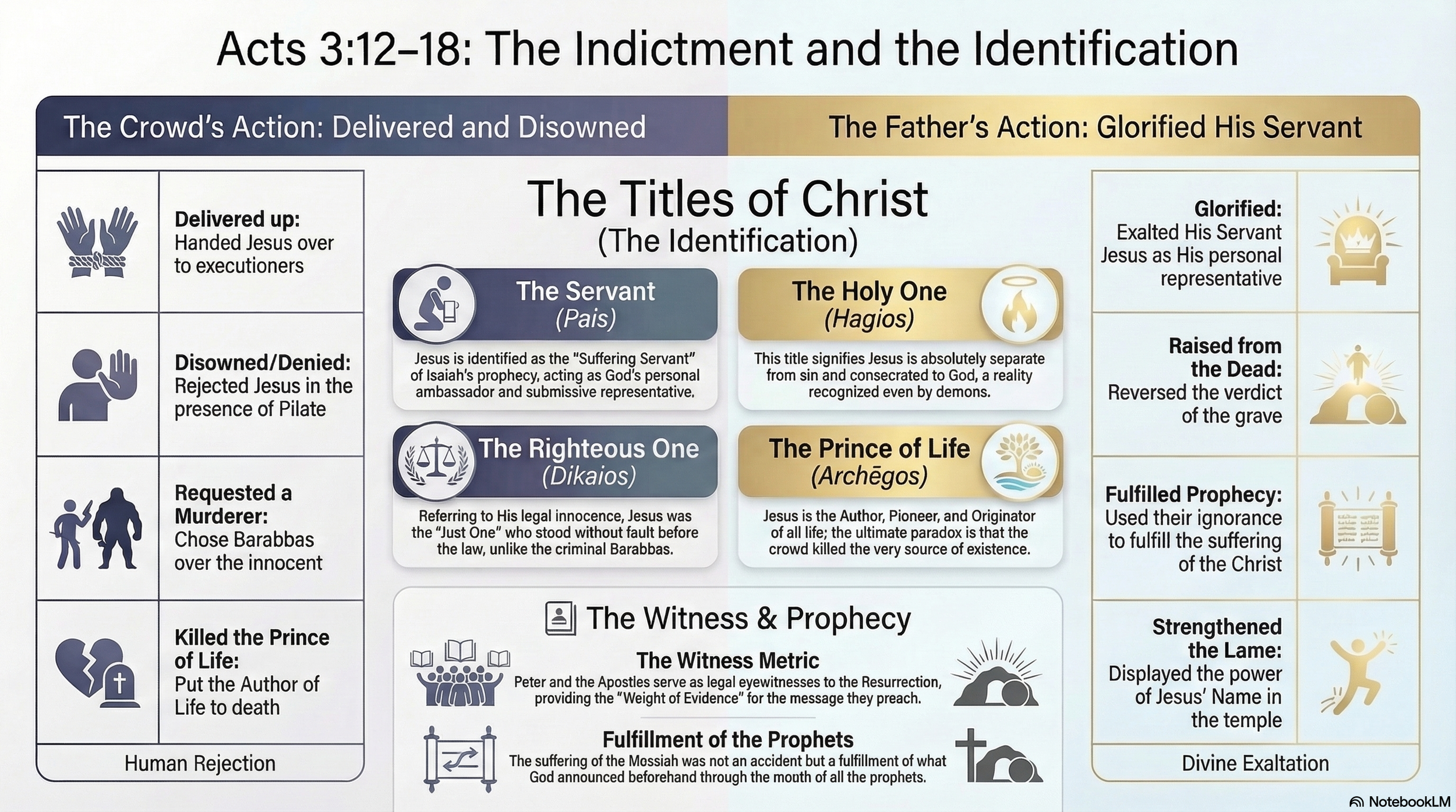
Acts 3:12-18 reveals that Peter seized the curiosity of the crowd to redirect their focus to the name of Jesus. Following the temple healing, the apostle addressed the Men of Israel, demanding why they would gaze at us as though human power or piety restored the lame man. Peter presented a legal indictment against the nation for how they delivered up and disowned the Holy and Righteous One before Pilate. While the people put to death the Prince of life, God reversed their verdict and raised Him from the dead. This confrontation highlights that the God of our fathers has glorified His servant Jesus, proving the miracle occurred through faith in His name. Ultimately, Peter explained that these events fulfilled what God announced beforehand by the mouth of all the prophets.
To engage in a thorough Q&A with Dr. MacArthur's research, see “Ask John” section below.
Lens Presence
Lens 3: The Gospel (Telling the Story of Jesus) MacArthur emphasizes the significance of the majestic titles Peter uses to exalt Jesus. The healing served as a divine sign pointing to the authority and character of the Messiah, rather than the merit of the apostles.
Lens 4: Prophecy Fulfillment (The Vertical Link) Peter anchors the current events in the Old Testament, showing that the suffering of His Christ was not a tragedy but the fulfillment of the divine blueprint announced beforehand by the mouth of all the prophets.
Lens 5: Acceptance and Opposition (Institutional & Geopolitical Friction) The text highlights the intense friction between God's purpose and the crowd's rejection. Peter exposes the guilt of the people who disowned the Savior and instead asked for a murderer to be released.
Investigative Questions
"Ask John"
Peter utilizes six majestic titles to present Jesus as the Messiah, contrasting God's glorification of the Son with Israel's rejection. This systematic argument is designed to pin the audience against the wall of their own guilt before offering the hope of grace.
Lens 3: The Gospel (Telling the Story of Jesus)
How does the title Prince of life establish the deity of Jesus and highlight the paradox of the crowd asking for a murderer to be released?
Why is the fact that God raised Him from the dead the essential evidence required to prove that the miracle was performed through faith in His name?
Lens 4: Prophecy Fulfillment (The Vertical Link)
In what way does the title His servant Jesus connect the current mission to the suffering servant described by the mouth of all the prophets?
How does the suffering of His Christ prove that the rejection by the people was actually part of what God announced beforehand?
Lens 5: Acceptance and Opposition (Institutional & Geopolitical Friction)
How did the Jewish leaders use institutional pressure to force the execution of Jesus even after Pilate had decided to release Him?
Why does Peter emphasize that the people disowned the Holy and Righteous One as a means of establishing their individual and national guilt?